
|
Getting your Trinity Audio player ready...
|
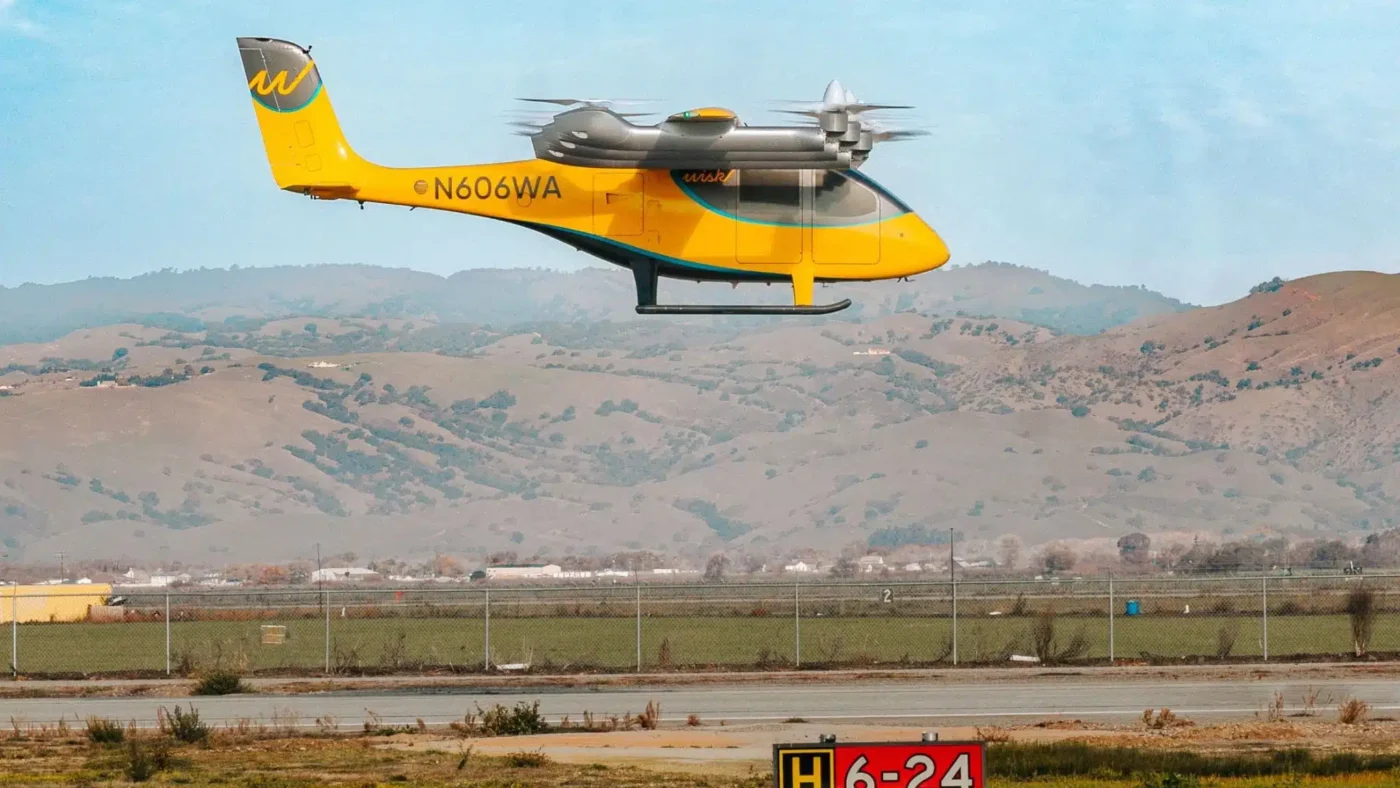
US-based company Wisk Aero, backed by Boeing, completed the first flight of its Generation 6 autonomous electric vertical take-off and landing aircraft (eVTOL) on December 16 at its test facility in Hollister, California.
The company said the aircraft conducted a vertical take-off, hover, and stabilised flight as part of its certification programme in the United States.
The flight marks the first test of an autonomous passenger aircraft that Wisk has submitted for type certification to the US Federal Aviation Administration (FAA). According to Wisk, Generation 6 is intended for commercial use, with planned launch markets, including Houston, Los Angeles and Miami.
Wisk said the initial flight validated core flight systems and marked the start of a wider test campaign focused on safety and performance. The company has completed more than 1,750 test flights across six aircraft generations, according to the statement.
“This first flight is the moment our team has been working towards,” Wisk chief executive officer Sebastien Vigneron said. “It reaffirms our belief in autonomy, and we are even more energised to continue the journey to bring safe, everyday flight to everyone.”
Generation 6 forms part of Wisk’s ongoing certification project with the FAA. The company said the aircraft is designed to meet existing commercial aviation safety standards and operates without an onboard pilot, with human oversight provided by a ground-based supervisor.
Brian Yutko, vice-president of product development at Boeing Commercial Airplanes, and chairman of Wisk’s board, said the programme has relevance beyond the company. “The engineering methods and technologies are all a valuable source of insight for Boeing as we work together and thoughtfully apply them to the future of flight,” he said.
Wisk said upcoming tests will expand from hover operations to higher speeds and altitudes. The programme will also include complex manoeuvres such as transitions between flight modes.
In parallel, the company will continue work on autonomy systems, including detect-and-avoid and navigation, while coordinating with the FAA, NASA, and other partners.
