
|
Getting your Trinity Audio player ready...
|
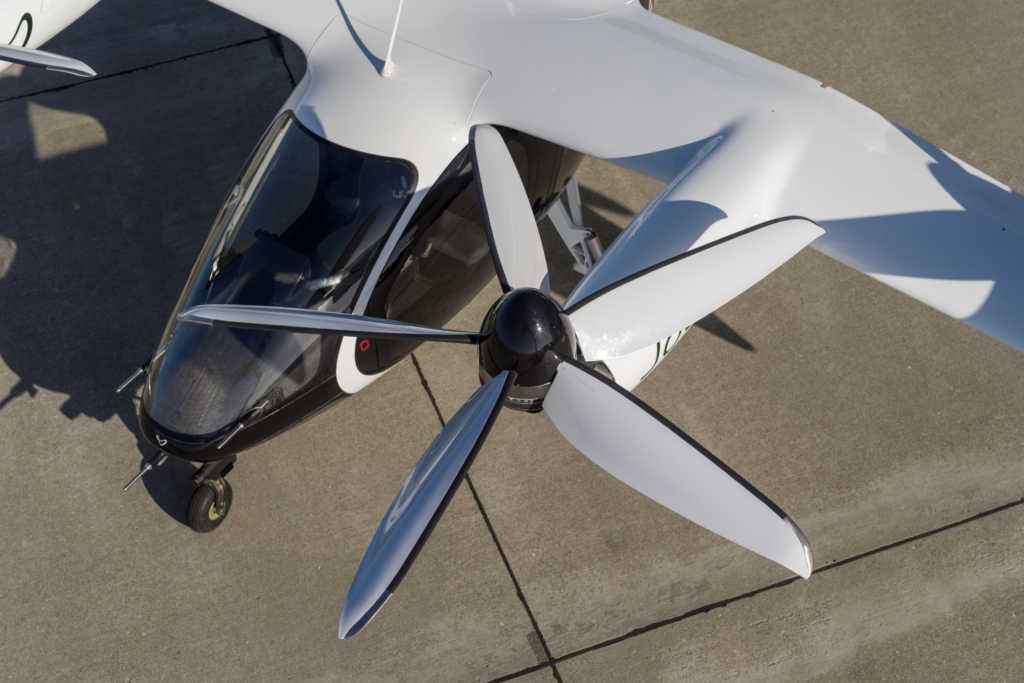
Joby Aviation is moving closer to commercial readiness as it prepares to begin large-scale pilot training for its electric vertical take-off and landing (eVTOL) aircraft, a step widely seen as one of the final operational hurdles for the air taxi sector.
The milestone comes as Joby takes delivery of the first of two advanced flight simulators developed with CAE, laying the foundations for a structured, certifiable training pipeline designed to support high-volume urban operations.
Joby’s simulators arrive ahead of eVTOL pilot training
The first simulator, now preparing for installation at Joby’s expanded manufacturing and training facility in Marina, California, is a fixed-base CAE 3000 Series device.
It is expected to be qualified by the Federal Aviation Administration as a Level 7 Flight Training Device. A second unit, a Level C full-flight simulator with full motion, is scheduled to arrive later this year.
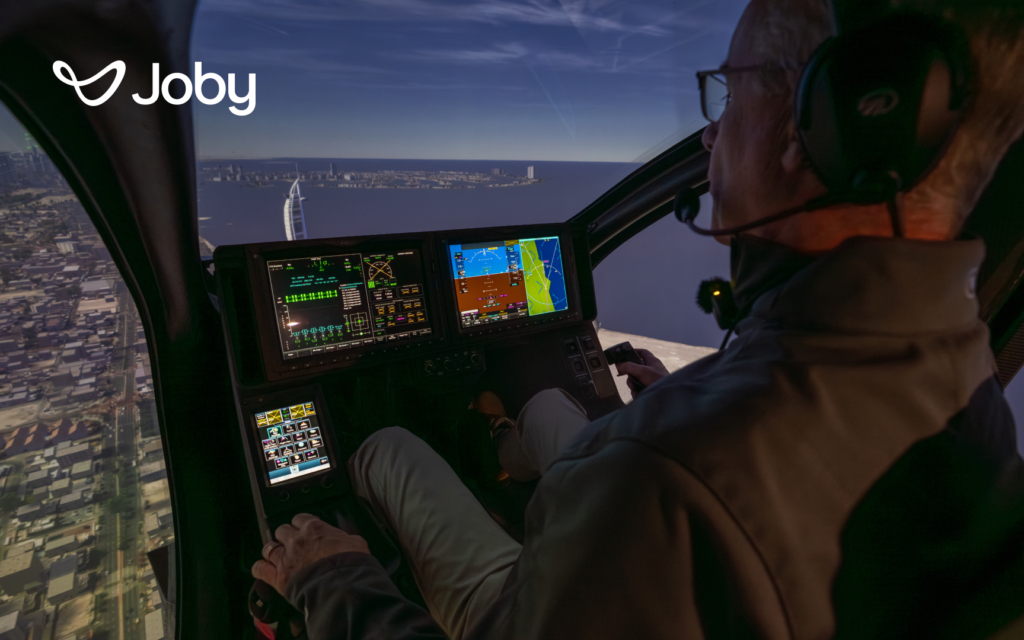
Once both are operational, Joby says the facility will be capable of training up to 250 pilots a year, a clear signal that the company is planning for scale rather than limited demonstration operations.
Both devices feature a 300-by-130-degree field of view and are powered by CAE’s Prodigy Image Generator, using Epic Games’ Unreal Engine to create highly detailed, immersive urban environments. Audio cues, vibration, turbulence and complex wind effects around buildings are all modelled to reflect the realities of low-level city flying.
Joby describes the simulators as a digital twin of its aircraft, intended not just as a training aid but as a formal means of compliance within the FAA certification framework.
“Developing flight simulators that are fully qualified by the FAA takes years of work and access to aircraft data, and it is required for Part 135 operations of eVTOL aircraft in the United States,” says Bonny Simi, President of Operations for Joby.
“Having started this multi-year process with CAE in 2022, Joby is progressing in developing qualified, scalable pilot training infrastructure as we near commercial operations.”
Who can train to fly Joby’s S4 eVTOL?
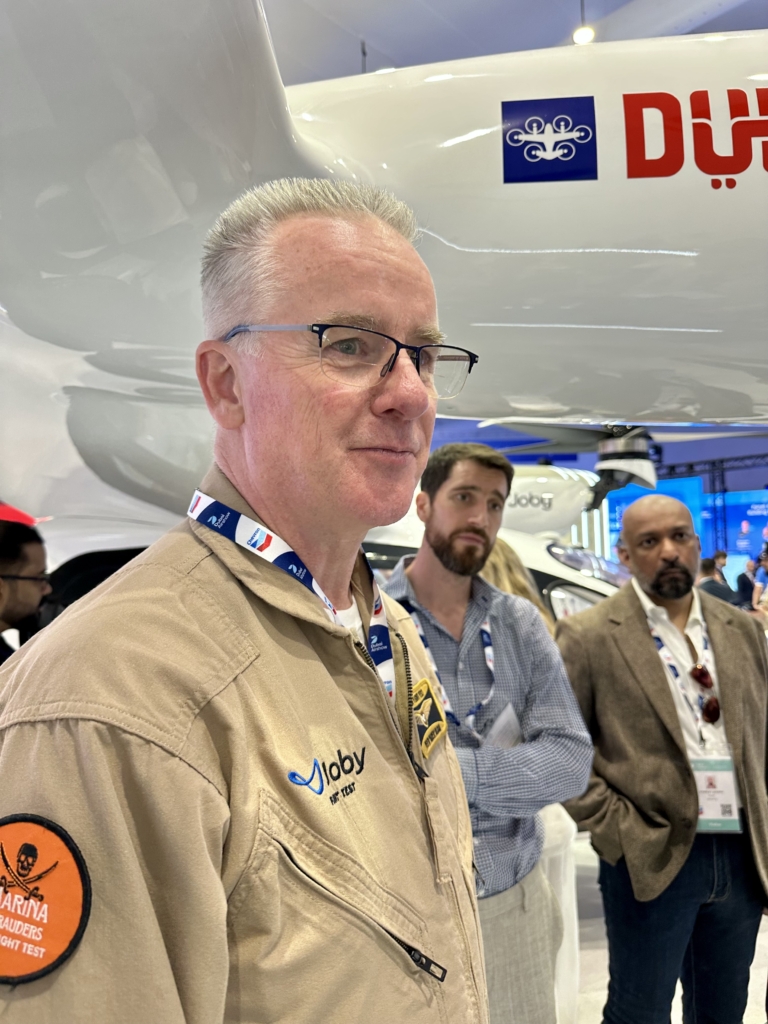
Speaking to AGN on the sidelines of the Dubai Airshow, Joby test pilot Peter ‘Wizzer’ Wilson noted that the company is deliberately casting a wide net when it comes to pilot backgrounds.
“The prerequisite for coming into the training will be a commercial license, but that commercial license can be either on a helicopter, fixed wing or powered lift,” Wilson explained, noting that an instrument rating will be required too.
“It’s important to us that the pilots have demonstrated already the ability to get a procedural rating,” he explained, “and then we put them through a type rating for the S4.”
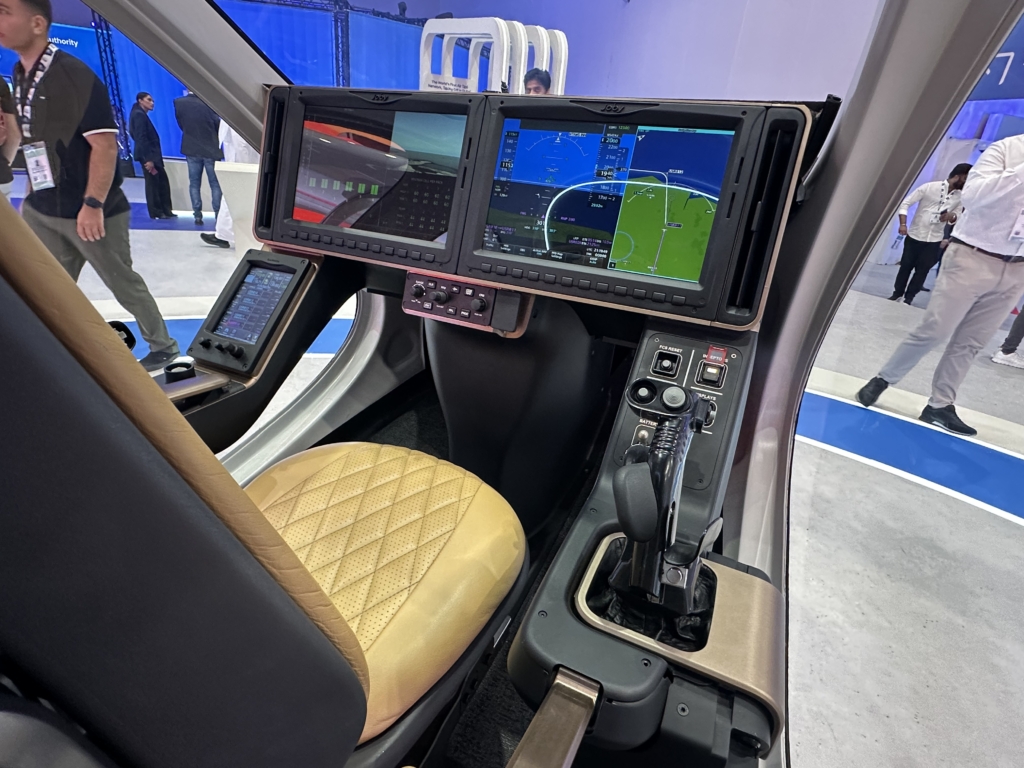
Wilson noted that the type rating is important because individual eVTOL companies are developing their own control schemes that are unique to their aircraft. For Joby, the company has used the unified control system used on the F-35B, which will make the controls rather familiar to a certain set of pilots.
“An F-35B pilot could get in the aircraft and fly,” Wilson told AGN. “They could literally jump in and feel very at home.”
With regards to who would find flying the S4 easier, Wilson noted that, despite surface similarities to rotorcraft, helicopter pilots may take a little longer to adjust to the controls.
“Helicopter pilots spend their time really controlling height extremely tightly,” he said. “They get exceptionally good with their left arm at controlling height, and it becomes absolute, like, you know, it’s like, complete intuition. You can’t get rid of that.”
With Joby’s S4 controls working on the opposite side, the adjustment will require some remapping of instincts for rotorcraft pilots. Nevertheless, Wilson expects a healthy mix of backgrounds to progress to flying the S4.
“I imagine there’ll be people with a helicopter certificate, with an S4 type rating, and there’ll be others with an aircraft certificate and an S4 type rating, and they’ll all be qualified to fly the S4,” he concluded.
How long will it take to train to fly Joby’s eVTOL?
Wilson shared that, all in, the type rating course for the S4 is expected to take just six weeks of training.
Two weeks of that will be ground training, which will include some VR and avionics work as well as time in the classroom learning about the aircraft.
After that, the next four weeks will be flight training, with one to two flights per day for trainee pilots. Most of that will be on simulators, with a flight in the real aircraft thrown in every five to six sessions.
Interestingly, Joby’s trainee pilots will fly solo from their first flight, and that early exposure is something the company believes is crucial to developing a competent and confident pilot pipeline.
“It helps build that mental model for the pilot very early on in their training,” Wilson explained. “That way, when you get back in the simulator, you can add to the experience and believe in it, because you know it is the same as the aircraft. Getting that mental model in place super early is crucial to us.”
Joby’s trainee pilots will hover before forward flight
One of the more unconventional aspects of Joby’s training philosophy is how pilots first fly the aircraft. Rather than beginning with conventional wing-borne flight and progressing to vertical operations, as has been seen in test campaigns for various eVTOLs, Joby’s trainees will do the opposite.
“They go straight into vertical take-off and landing,” Wilson said. “That first solo will be a vertical takeoff, smile for the audience, then land it again.”
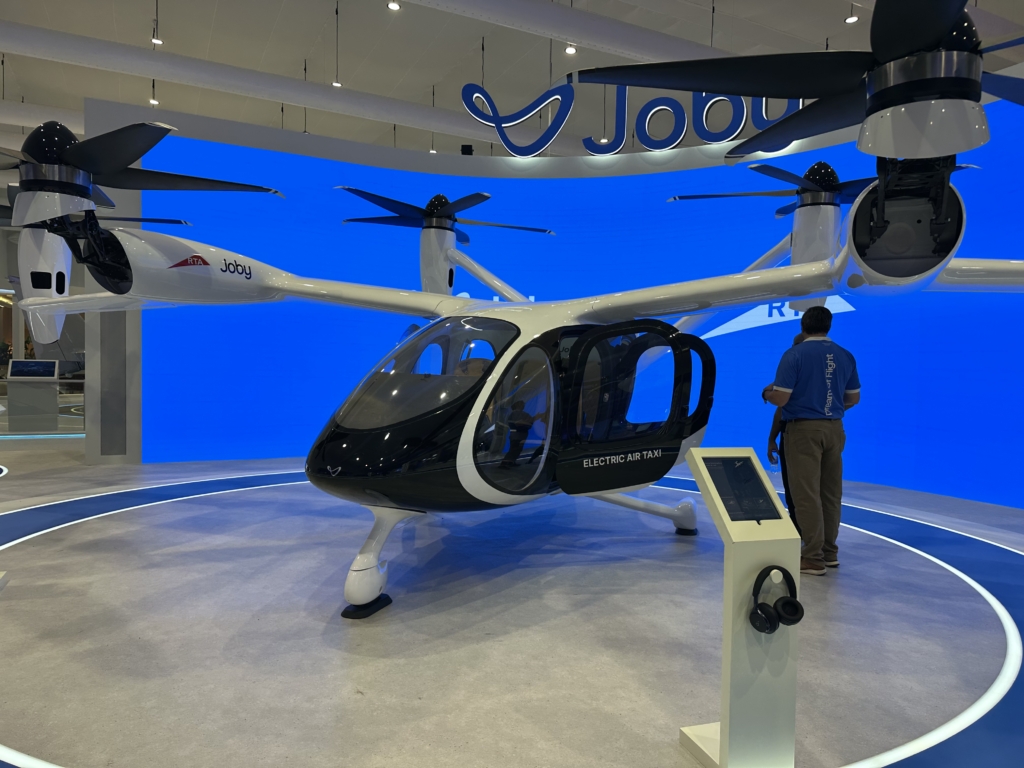
The reasoning is practical. Vertical flight is the simplest phase of operation in terms of pilot inputs, with all the controls on the right hand. Added to this, if something does go wrong, the pilot is in a good position to just put the aircraft back on the ground.
From there, pilots gradually expand the envelope, adding manoeuvring and eventually transitioning into wing-borne flight. Wilson noted that test pilots typically reach 100 knots by their fourth flight, underscoring how quickly pilots can progress once the fundamentals are in place.
Wilson added that around 30 pilots have already received some form of training on the Joby S4, although just 10 are considered to be qualified.
A simulator built around Joby’s unique training needs
Joby’s pilot training approach is built around a deep partnership with CAE, widely regarded as the global leader in high-fidelity flight simulation. According to head test pilot Peter Wilson, the simulator configuration was the result of deliberate design choices rather than a standard, off-the-shelf solution.
“We looked at everything, collimated displays versus direct visuals, big domes versus small domes, how much visual coverage we wanted,” Wilson said. “What we’ve ended up with is something I think will be unsurpassed in the eVTOL industry.”
At the centre of the simulator is a fully conforming Joby-built fuselage that was originally on the production line to become a flying aircraft. Instead of a replica shell, Joby removed the real fuselage and sent it to CAE, ensuring the simulator mirrors the aircraft pilots will eventually fly.
Inside, the simulator uses a real Garmin flight deck rather than emulated controls, with Joby’s own software integrated directly with CAE’s systems. That software drives every major sensory cue, including acoustics, vibration, motion and visuals, minimising abstraction between simulator and aircraft.
The visual system sits inside a very large dome, extending roughly two-thirds of the way up to the hangar roof structure, providing extensive field-of-view coverage. Wilson described the visual fidelity as “absolutely out of this world,” to make the simulator indistinguishable from the real aircraft once pilots are inside.
