
|
Getting your Trinity Audio player ready...
|
Designed to bridge the gap between automotive ease and aerospace innovation, the vehicle targets consumers looking for adventure rather than just urban commuting.
CES 2026 officially launched a new era for personal flight as Rani Plaut, CEO of AIR, showcased his “sports car of the sky” on the world stage.
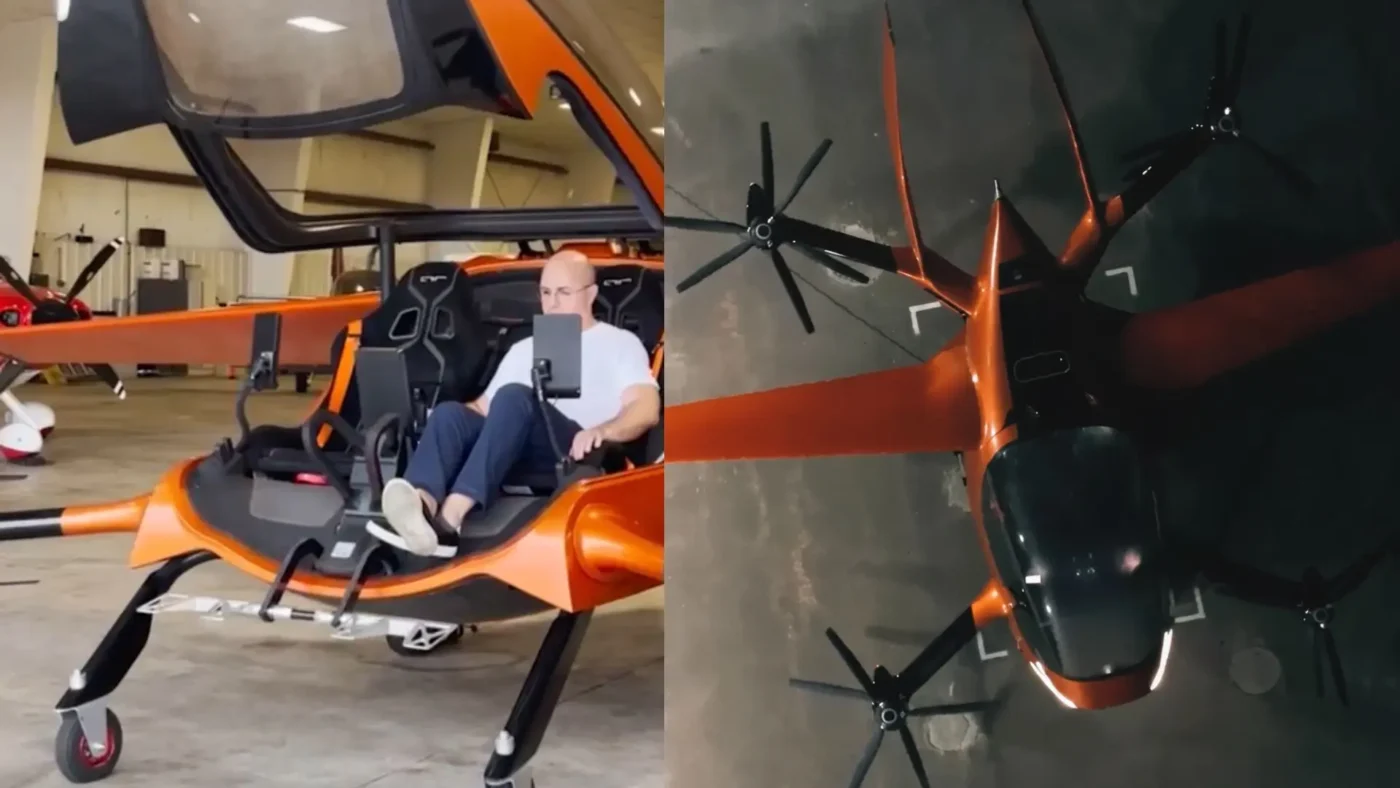
The company presented the AIR ONE, an all-electric vertical takeoff and landing (eVTOL) aircraft. This vehicle demonstrates how close the dream of accessible aviation has become.
Designed to bridge the gap between automotive ease and aerospace innovation, the vehicle targets consumers looking for adventure rather than just urban commuting.
Plaut aims to simplify the flying experience by utilizing software that mirrors a car rather than a traditional airplane.
In an interview with Interesting Engineering, Plaut explained the philosophy behind the aircraft’s accessibility.
“We believe that aviation can be accessible to many more people,” Plaut said.
“The way to do it is simplicity. The design of the aircraft is based on automotive performance and automotive mass production.”
The company intends to move away from the low-volume manufacturing typical of the aviation industry. Instead, Plaut plans to scale operations significantly to meet global demand.
“You can produce tens of thousands of units per year,” he stated.
“Nobody has ever done it. We are starting from a capacity of 60 per year, going up to 250 per year, and our goal is 1,000.”
Safety through advanced technology
Safety remains the primary concern for any personal aircraft, and Plaut addresses this through extreme hardware redundancy.
While many observers compare the craft to a large drone, the internal physics and safety systems are much more complex.
“The quadcopter architecture is known, very maintainable, very stable,” Plaut noted.
“We have eight motors. We can lose any one of the critical components and land safely.”
This redundancy ensures that the aircraft remains manageable even during a partial system failure.
The design focuses on preventing emergencies before they can impact the pilot or passenger.
“So the design is more about not having emergencies at all,” the CEO explained.
