
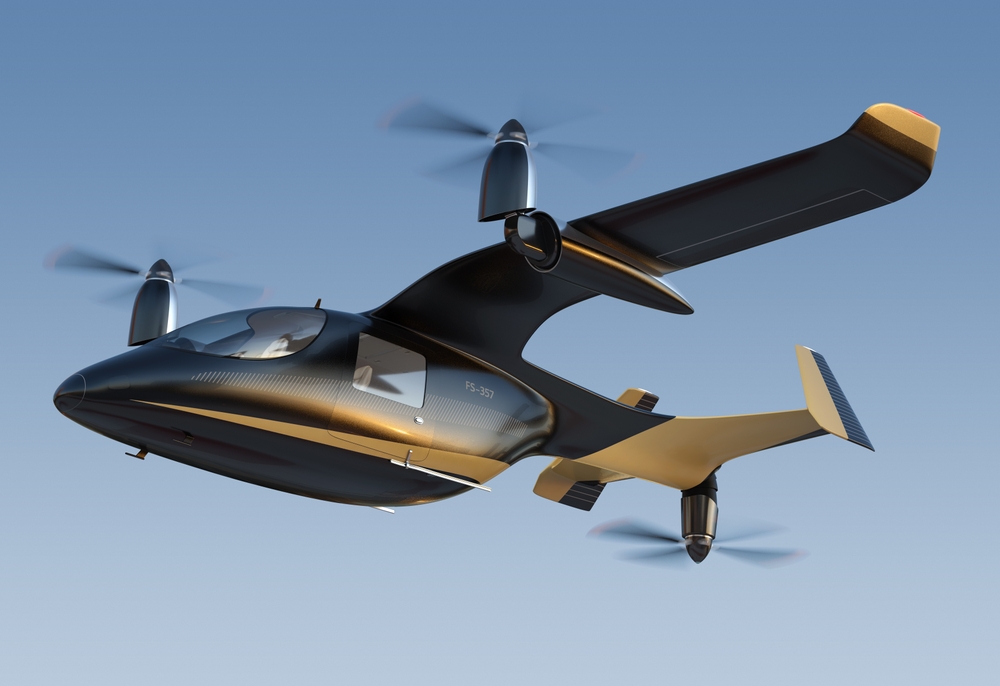
For almost ten years now, we have been hearing about the promise of “new aviation,” something that would vaguely resemble the 120-year-old technology that has defined traditional aviation since the Wright Brothers’ flight in 1903. This revolutionary way to reach for the skies – eVTOL – has been based on two fundamental principles. First, the “e” in its name defines the powerplant, as it is purely electric as opposed to burning fossil fuels, as with traditional aviation.
The second part of the term is where things get a bit more complicated. VTOL, or vertical takeoff and landing, means that the aircraft can start and end each mission like a helicopter but perform in cruise as a fixed-wing platform in a configuration where fighting gravity becomes a shared task between the engines and the wing. Initially, the industry called this technology Urban Air Mobility (UAM), but in March of 2020, NASA labeled the nascent industry as Advanced Air Mobility (AAM), a term that is widely accepted today as a better and more inclusive fit than UAM.
For almost five generations, humans have surrendered enormous amounts of land and valuable real estate to the reality of airports. These are large and complex extensions of land that can accommodate the enormous aircraft that require thousands of feet of runway to take to the skies, and then an equal amount of distance to dissipate all that accumulated kinetic energy.
The adoption of the hub-and-spoke scheme after the U.S. airline industry was deregulated in 1978 created the need for behemoth airports such as Dallas-Fort Worth, Atlanta International, and many others. The deregulation allowed airlines to freely organize their routes, making the hub-and-spoke system, which concentrates flights at central airports to serve a large number of destinations, the dominant strategy for most major carriers. This strategy had the unintended consequence of creating a large concentration of flights in and out of large urban centers.
