
|
Getting your Trinity Audio player ready...
|
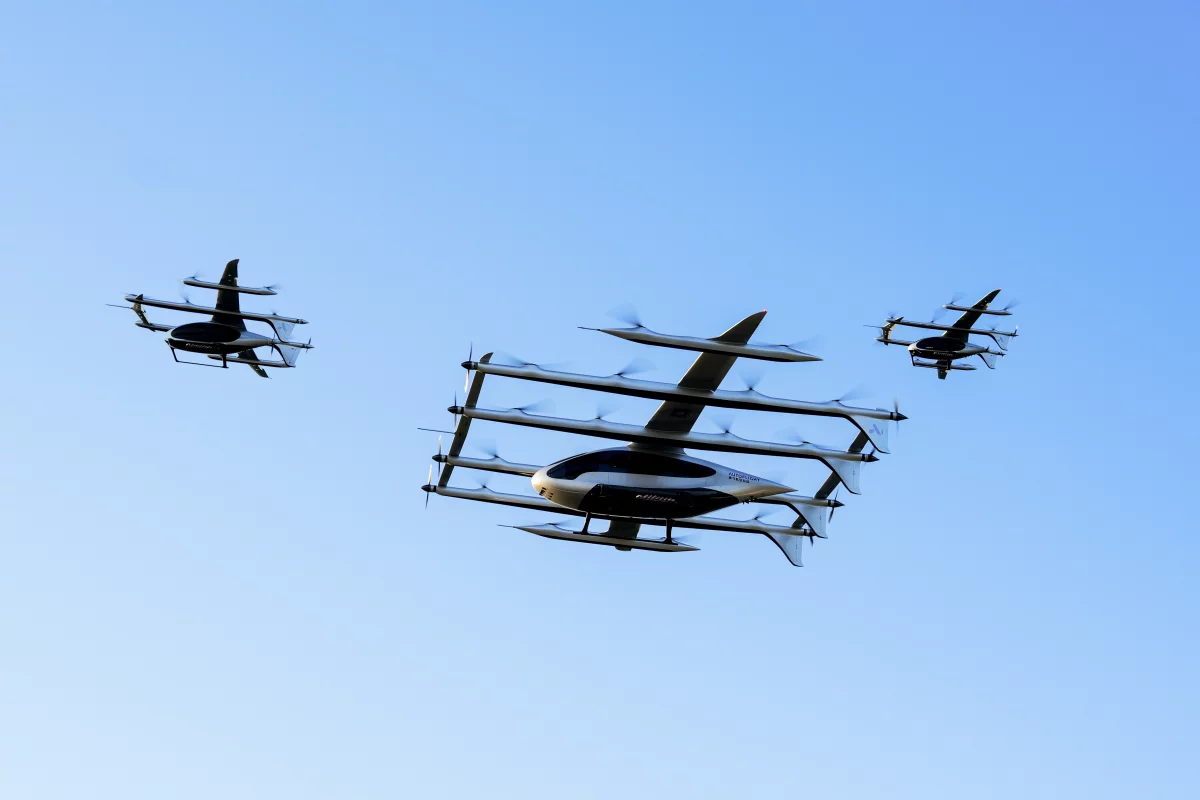
AutoFlight has completed a heterogeneous three-aircraft formation flight with the V5000 Matrix, a 5-metric-ton electric aircraft that could push eVTOL technology well beyond the urban air taxi niche.
The mission – one V5000 Matrix flying in coordination with two V2000-series aircraft – validated cross-platform communication links, route planning, flight coordination, and safety control across 5-ton and 2-ton platforms simultaneously.
Many eVTOLs making headlines are compact machines designed to ferry two or four passengers across a city center. AutoFlight is literally thinking much bigger. The V5000 Matrix spans 20 m (65.6 ft) wingtip to wingtip, stretches 17.1 m (56.1 ft) in length, stands nearly 3.3 m (11 ft) tall, and has a maximum takeoff weight of 5,700 kg (12,566 lb) – making it the largest publicly known, full-scale crewed eVTOL in development by sheer physical footprint.
To appreciate how far ahead that puts the Matrix, consider the competition. The Lilium Jet, one of the widest eVTOLs ever designed with a wingspan pushing 14 m (45.9 ft), caps out at 3,175 kg (7,000 lb). Joby’s S4 – the furthest along in FAA certification – is smaller still, at roughly 2,400 kg (5,291 lb) and a wingspan of 14 m (46 ft). BETA’s ALIA and Archer’s Midnight both sit around 15-m (49.2 ft) wingspans.
No other eVTOL currently flying or in late-stage development matches the Matrix’s wingspan-plus-length footprint. Unless one does, and it’s currently classified.
The Matrix is a platform with two distinct personalities. The all-electric passenger version seats up to 10 in a business-class layout or six in a VIP configuration, with lavatories, climate control, ambient lighting, and oversized windows. AutoFlight compares its cabin experience to that of high-end business jets. Electric range is 250 km (155 miles). Back in February, this version completed a full transition flight at the Kunshan civil drone test base in China – moving from vertical takeoff to fixed-wing cruise and back to vertical landing. That’s a technical hurdle many next-generation aircraft designs have yet to clear.
