-
eVTOLs are often positioned as cleaner alternatives to traditional helicopters.
But long-term environmental impact will depend on how electricity is generated, battery recycling processes, and lifecycle emissions.
Sustainability must be measured end-to-end — not just at the aircraft level.
True progress comes from holistic environmental planning.
-
![Profile picture of Saurabh Mall]()
Saurabh Mall posted in the group The Sky Community
Reliable energy infrastructure is critical for sustainable eVTOL deployment.
Key considerations:
• High-capacity electrical connections at vertiports
• Fast and efficient charging systems
• Backup power planning
• Integration with renewable energy sourcesEnergy readiness will directly influence operational consistency and long-term scalability.
-
eVTOLs are electric — but electricity availability is not unlimited.
Large-scale operations will require strong grid capacity, fast-charging systems, and energy redundancy at vertiports.
Without robust energy planning, scalability will slow down.
The future of urban air mobility depends as much on power supply as on aircraft design.
-
![Profile picture of Sunny Rathaur]()
Sunny Rathaur wrote a new post
![]() Read More
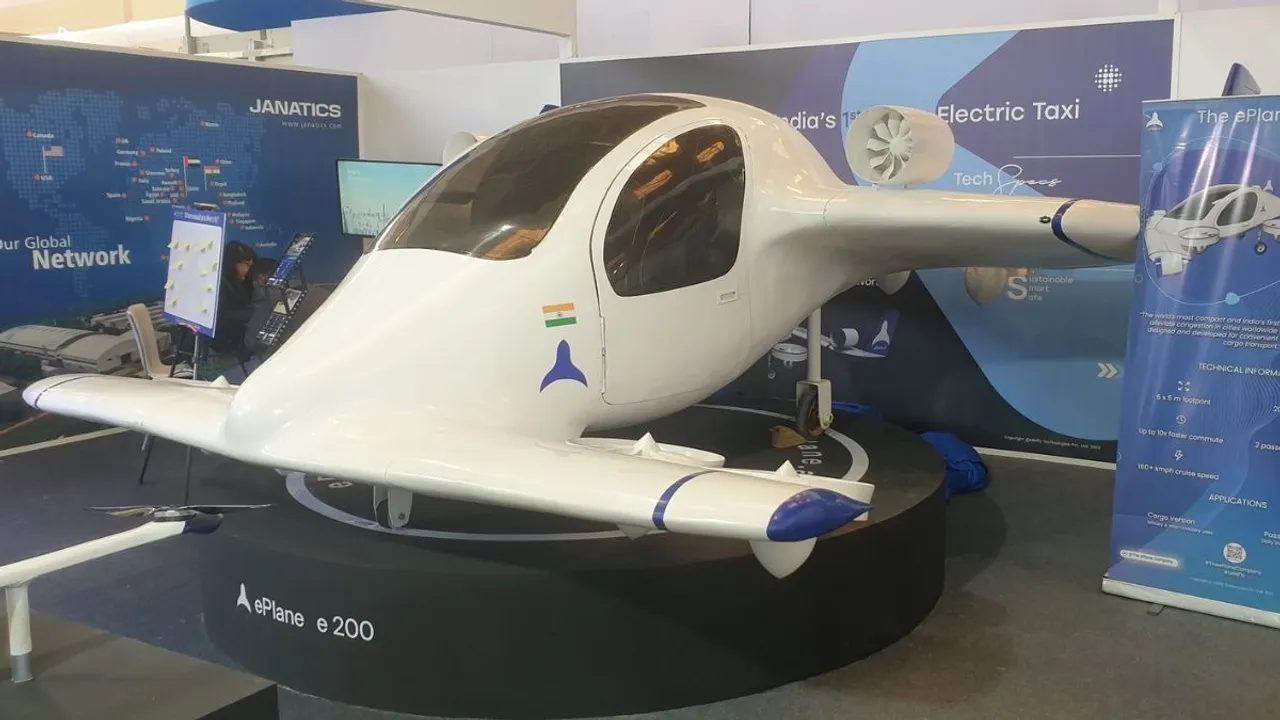
Read MoreThe ePlane Company has inaugurated a state-of-the-art prototyping and testing facility at the IIT Madras Discovery Campus, marking a major step forward for India’s urban air mobility ambitions. Spanning 60,000 sq. ft., the site is the country’s first integrated...
-
![Profile picture of Sunny Rathaur]()
Sunny Rathaur wrote a new post
![]() Read More
Read MoreThe ePlane Company, a pioneer in electric vertical take-off and landing (eVTOL) technology in India, has inaugurated a state-of-the-art prototyping and testing facility at the IIT Madras Discovery Campus in Thaiyur. The marks a crucial shift from initial design concepts...
- Load More Posts