-
![Profile picture of Saurabh Mall]()
Saurabh Mall posted in the group The Sky Community
Certification remains one of the most critical factors in eVTOL commercialization.
Key focus areas include:
• Aircraft safety standards and redundancy
• Battery performance and thermal management
• Noise and environmental compliance
• Harmonization across global regulatorsClear certification pathways are essential for scalable and saf…Read More
-
eVTOL prototypes are impressive.
Certification is where the real challenge begins.
Safety validation, redundancy, and regulatory alignment will ultimately define timelines — not marketing announcements.
Certification isn’t a hurdle to rush. It’s the foundation of trust.
-
![Profile picture of Saurabh Mall]()
Saurabh Mall posted in the group The Sky Community
Pilots will play a central role in the initial phase of eVTOL operations.
Key considerations include:
• Pilot training and certification pathways
• Human-machine interface design
• Gradual transition toward autonomous systems
• Public and regulatory confidenceA phased approach to autonomy can support safe and scalable eVTOL adoption.
-
Despite long-term autonomy goals, early eVTOL operations will rely heavily on pilots.
Human oversight builds trust, supports safety validation, and helps regulators gain confidence.
Autonomy will come — but pilots will lead the transition.
-
![Profile picture of Sunny Rathaur]()
Sunny Rathaur wrote a new post
![]() Read More
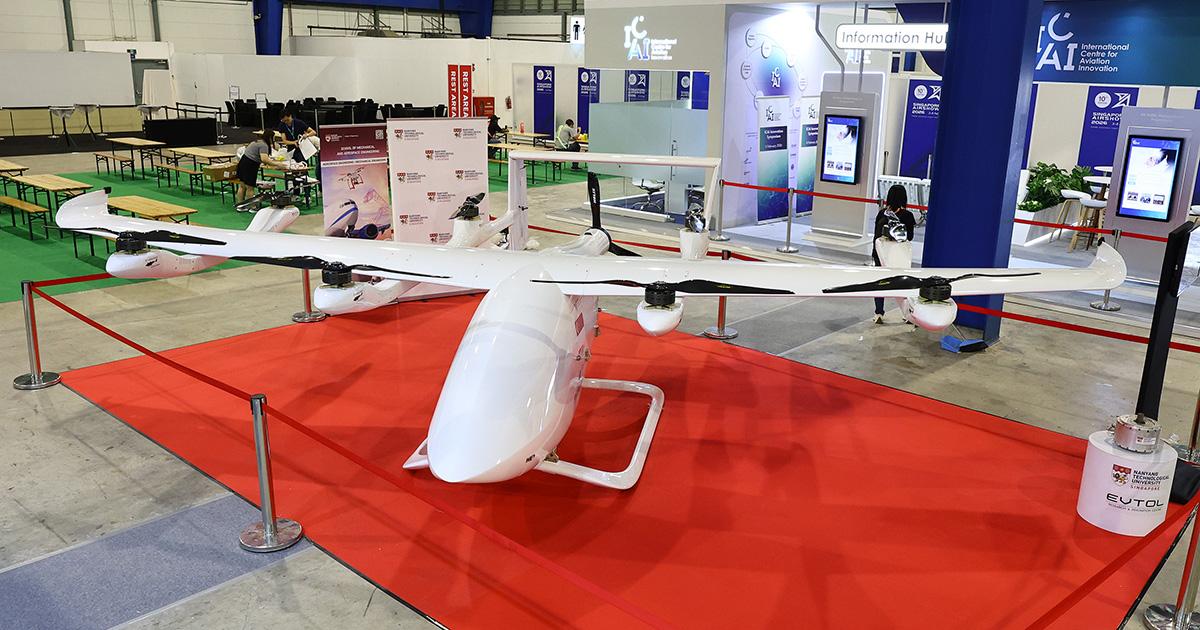
Read MoreSingapore’s Nanyang Technological University (NTU) has revealed an eVTOL design that could become the country's first domestically produced passenger aircraft. Although certification of a full-scale aircraft isn’t expected until 2035, flight testing of the sixth-scale model unveiled today is...
- Load More Posts