
|
Getting your Trinity Audio player ready...
|
In the protracted race for certification, four of the front-running eVTOL developers continue to expand the envelope of their flight-test prototypes. However, while Archer Aviation, Eve Air Mobility, Joby Aviation, and Vertical Aerospace continue to progress with their programs, cash considerations remain an inevitable headache.
First-quarter 2026 results revealed more. While U.S. contenders Archer and Joby are confident of a 2026 entry into service under the federal government’s eVTOL Integration Pilot Program (eIPP), the UK’s Vertical and Brazil’s Eve both cautioned that type certification expectations may now slip into 2028. To date, only Joby has made a transition flight of a type-conforming vehicle—something Archer expects later this year, and Eve in 2027. Archer’s adjacent clean-sheet, hybrid-electric defense variant, under development with partner Anduril, will also be revealed later this year.
Cash Considerations
Cash burn remains at the forefront of any prudent developer’s strategy, with this number invariably creeping up quarter by quarter as certification activities intensify. Archer ended the period with $1.8 billion in liquidity, citing spending “in line with guidance.” U.S. rival Joby ended the quarter with $2.5 billion in cash and equivalents, for a spend of $195 million.
Meanwhile, in the UK, Vertical Aerospace CEO Stuart Simpson stressed the difference in budget the British developer was working with. “We’ve delivered more than anyone else spending between 25% and 30% of what they do,” he suggested.
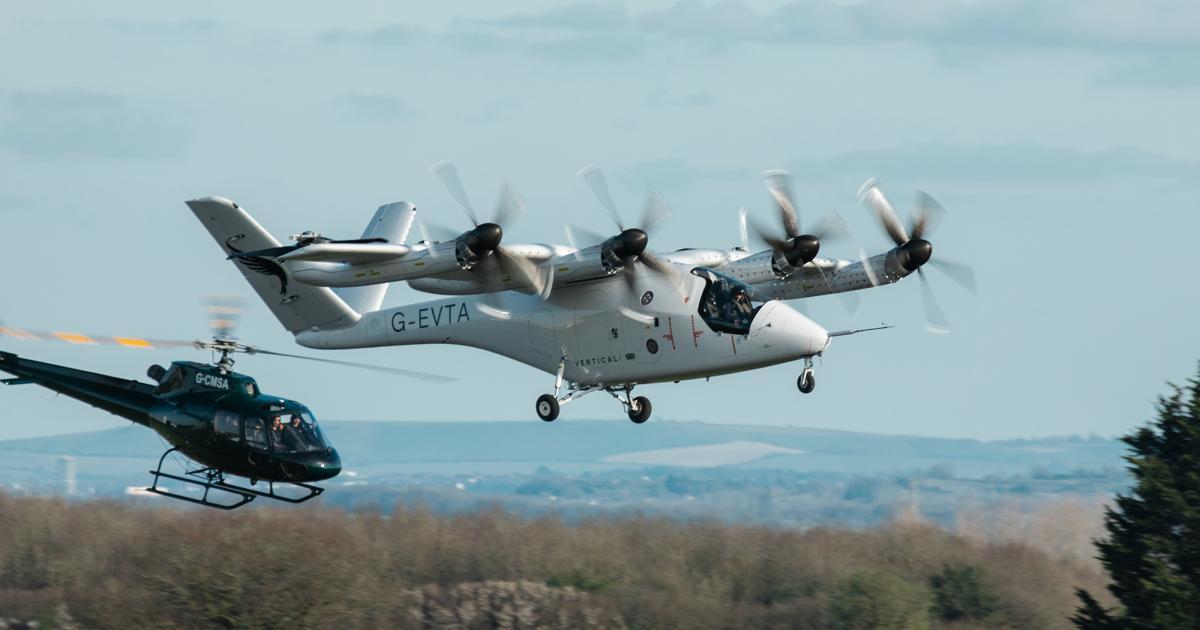
Nevertheless, Vertical’s first-quarter net cash use of $47 million leaves it with around $96 million, which—combined with $30 million of “anticipated near-term receipts from tax reliefs and grants”—means that Vertical could realistically run out of cash in 12 months without fresh investment. The company predicts a spend of around $180 million to $200 million over the next year. With Vertical having ended the quarter with around $103 million, “the board and management are actively reviewing options to maximize the runway from our available capital,” Simpson said.
Despite ending the first quarter of 2026 with what it stated is “a record cash position of $441 million and total liquidity of $578 million,” including $136 million in undrawn credit from the Brazilian Development Bank, Eve is also looking at cost-cutting measures. These include “new potential synergies” with parent company Embraer, including optimization of manufacturing assets and work-share, which are targeting savings of $100 million to $150 million over the next three years. These mitigating measures aside, the Embraer subsidiary expects to have enough cash to support operations through 2028.
