
|
Getting your Trinity Audio player ready...
|
Across the U.S. this year, electric, hybrid-electric, and autonomous aircraft will begin flying commercial cargo and medical missions under a federal pilot program—before the aircraft involved have received type certificates, and before the rules that will eventually govern them have been fully written.
That is the defining feature of the FAA’s eVTOL Integration Pilot Program (eIPP), a White House initiative that recently selected eight state-led projects to bring the nation’s advanced air mobility (AAM) ecosystem to fruition. Rather than waiting for new rules and regulations to enable commercial AAM operations, the eIPP will allow early commercial operations to proceed in an immature regulatory environment, with the goal of gathering data to inform those rules.
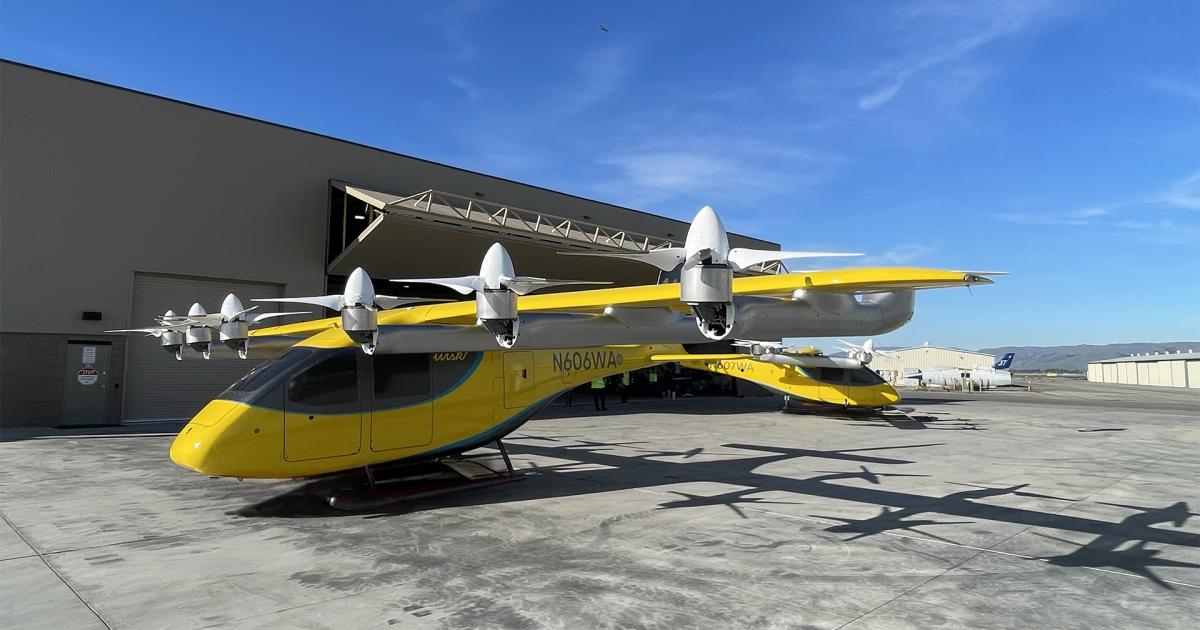
“It’s really a major policy unlock,” Dan Dalton, Wisk Aero’s vice president of commercialization and airline development, told AIN. Through the eIPP, Wisk—a Boeing subsidiary developing a pilotless eVTOL air taxi—can accelerate its path to market by getting a head start on the data collection flights needed to certify its autonomy system, he said. “What we would have normally done in a few years, [the eIPP] allows us to pull that left and collect that data even sooner.”
Selected from a pool of more than 30 proposals, the eight eIPP projects span 26 states, involve dozens of industry partners, and cover use cases from offshore oil logistics and organ delivery to firefighting—far more than just eVTOL air taxi operations for affluent passengers. Together, these eight projects constitute the largest coordinated experiment in advanced air mobility that the U.S. government has ever attempted.
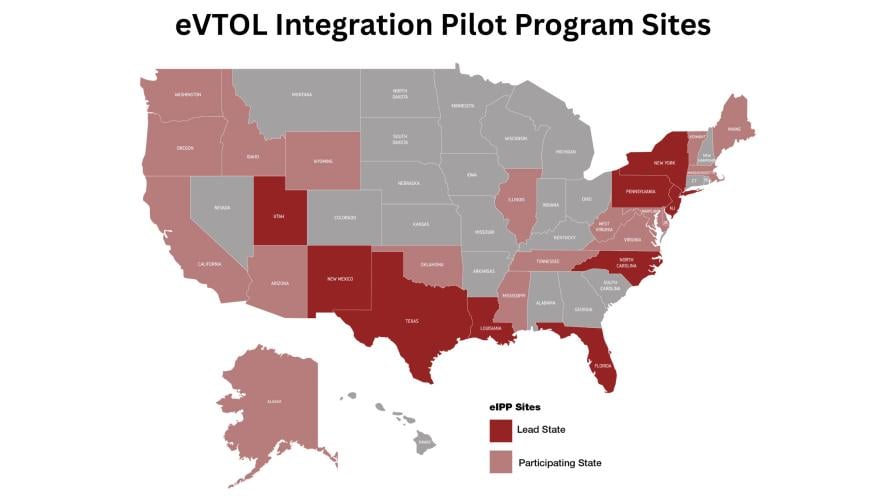
Under the eIPP’s Other Transaction Authority (OTA) structure, selected participants can conduct commercial operations under FAA-approved experimental frameworks prior to full type certification, a significant departure from the standard sequence in which certification must precede commercialization. The OTA mechanism, designed for speed and flexibility, is intended to move quickly from contract to flight, with initial operations targeted within 90 days of finalized agreements.
“We know that the program allows us to do commercial operations ahead of the type certificate issuance,” Dalton said. “So we’re actively looking at what those commercial opportunities could look like.”
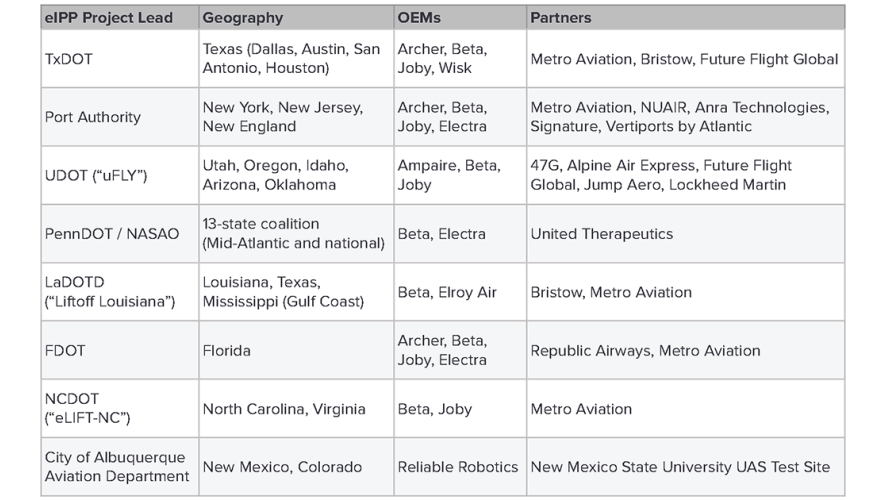
For Wisk, whose autonomous aircraft has no human pilot on board and therefore requires an entirely new regulatory framework, the implications are substantial. The company is participating in the eIPP project led by the Texas Department of Transportation (TxDOT), a coalition that also includes manufacturers of piloted eVTOL models: Archer Aviation, Joby Aviation, and Beta Technologies. Operators participating in the TxDOT project include aeromedical provider Metro Aviation, which is a Beta partner and customer, and Amazon, a Beta investor that has previously conducted cargo demonstration flights between its “Air Hub” facilities using Beta’s Alia CX300 electric airplane.
While Wisk intends to certify its pilotless, four-passenger Gen 6 eVTOL aircraft for commercial operations before the end of the decade, the company may not get around to flying passengers on any pilotless aircraft during the eIPP, Dalton said. Rather, the company intends to start deploying various conventional, piloted aircraft on eVTOL routes to collect data for the development and certification of its autonomy system. However, “it’s certainly not outside the realm of the possible for that to happen within the time bound of the eIPP,” Dalton said of passenger flights on the Gen 6, for which Wisk recently rolled out a second test aircraft. “It’s all just a matter of how fast all of the different partnerships and players move.”
“The insights we gather in Texas are not just limited to our aircraft or the state,” added Wisk CEO Sebastien Vigneron. “We are validating the entire digital and physical ecosystem. This program allows us to perform real-world operations that can be translated into FAA policy and regulations, ensuring that when Wisk launches our full commercial service, the regulatory environment is as ready as our aircraft.”
The Cargo Ladder
Across the eight selected eIPP projects, one clear pattern emerges: cargo and medical logistics dominate the portfolio.
Beta Technologies, participating in seven of the eight programs—more than any other OEM—is deploying its Alia aircraft almost exclusively for cargo and medical missions. In Louisiana, Beta is partnering with Bristow Group and Metro Aviation to support offshore energy operations in the Gulf of Mexico. In Maryland and Virginia, the company is conducting organ delivery logistics with medical logistics group United Therapeutics, its launch customer. In New York and Vermont, Beta is handling cargo and medical runs in upstate communities.
Perhaps the most unique cargo entry is Elroy Air’s Chaparral aircraft, selected for the Louisiana program. The autonomous hybrid-electric VTOL drone can carry 300 to 500 pounds of cargo up to 300 miles—specifications that position it for the kind of industrial supply chain work that dominates the Gulf Coast: drilling platform resupply, equipment delivery to remote energy sites, urgent cargo runs across a geography that has long depended on helicopters.
“Chaparral was selected to define the federal standard for uncrewed heavy-payload logistics,” said Elroy Air CEO Andrew Clare.
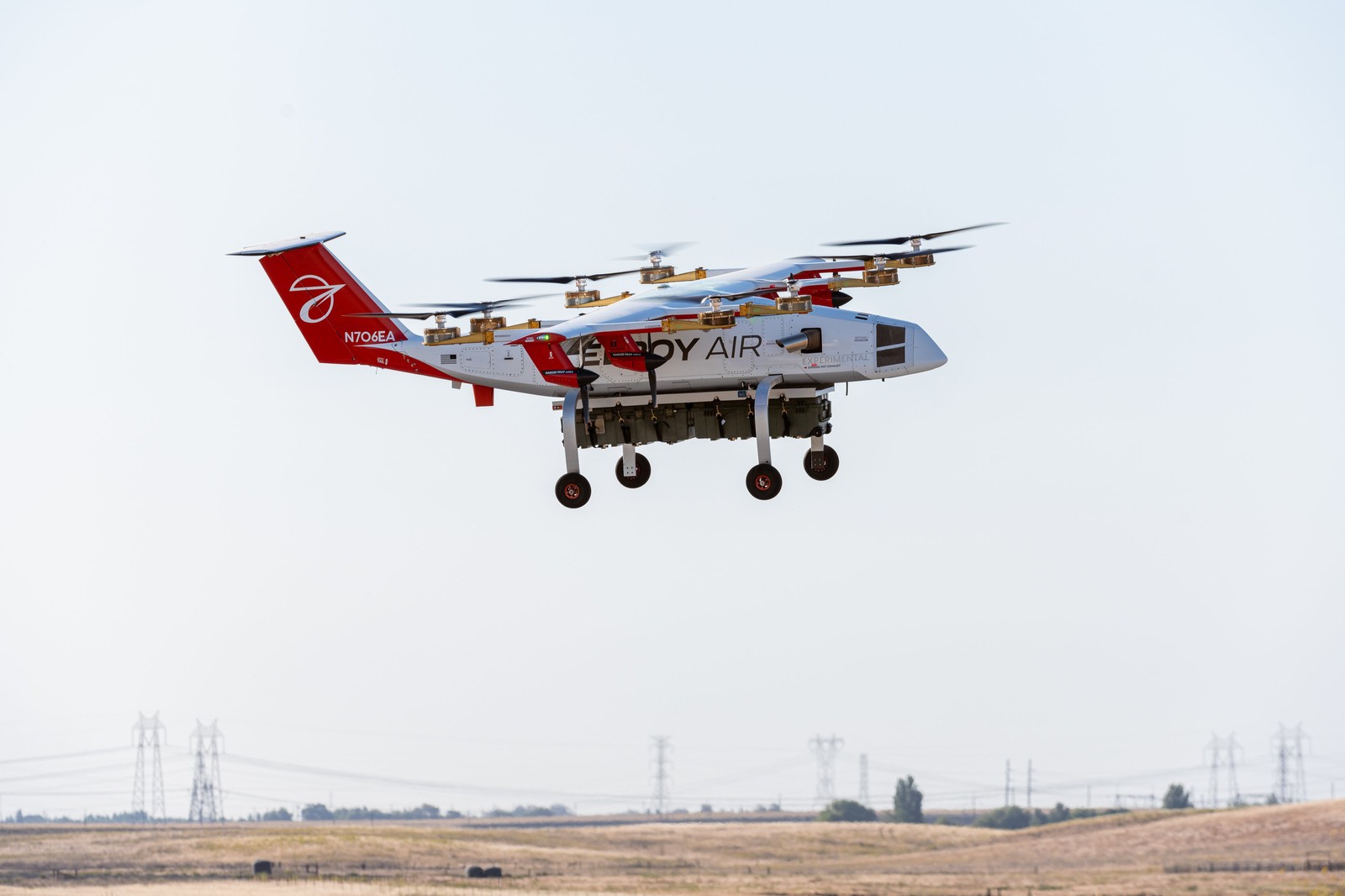
Bristow Group, a Houston-based global helicopter operator offering offshore energy transportation and search and rescue services, plans to add up to 100 Chaparral freighters to its fleet under a letter of intent signed in 2022.
“Our energy and government services customers are demanding lower risk, higher tempo, and more efficient options to meet the increasing demand for offshore aerial work, including the movement of critical cargo,” said Dave Stepanek, Bristow’s executive vice president and chief transformation officer. “Louisiana is our core U.S. base of operations to serve the Gulf Coast.”
Cargo and medical missions carry lower risk thresholds and face fewer regulatory hurdles and less friction with the FAA. They also generate the real-world operational data that will eventually underwrite approval for carrying passengers.
Autonomy’s Frontier
If cargo is the near-term engine of eIPP, autonomy is its most consequential long-term output.
Wisk is operating as what Dalton called a “pathfinder” for the FAA on autonomy policy—a role that extends beyond its own certification to shaping the regulatory architecture other operators will eventually use. Central to that effort is SkyGrid, an airspace management company that Wisk acquired as a subsidiary last year to vertically integrate its aircraft autonomy technology with established airspace automation capabilities. Where other eVTOL manufacturers rely on third parties for digital airspace services, Wisk now controls both sides of the equation in-house.
“Think of Wisk as developing the aircraft system,” Dalton explained; “SkyGrid is the corollary from an airspace management perspective.” The system enables autonomous aircraft to receive digital instructions from air traffic control, communicate with each other, and operate with tighter separation standards than piloted aircraft—analogous, Dalton noted, to today’s high-altitude operations, where aircraft rely on autopilot to meet required altitude-keeping performance, and a loss of that capability can require leaving the airspace.
The long-term ambition is what SkyGrid, Wisk, and Boeing refer to as “automated flight rules”—a new regulatory tier for highly automated aircraft operating in the low-altitude national airspace system (NAS), governed by digital communication rather than voice ATC. SkyGrid is already working with international partners and conducting simulation validation with the FAA and NASA. Dalton said announcements from countries preparing to deploy early versions of automated flight rules are imminent.
https://youtube.com/watch?v=nTPPR-stPc0%3Fenablejsapi%3D1%26origin%3Dhttps%253A%252F%252Fwww.ainonline.com
The most concrete near-term demonstration of autonomous flight in the eIPP portfolio comes from the City of Albuquerque. Working with Reliable Robotics, whose subsidiary Reliable Airlines has already been conducting cargo operations in Albuquerque since 2023, the project will operate an autonomous, remotely piloted Cessna Caravan from Albuquerque International Sunport (KABQ) to Colorado’s Durango-La Plata County Airport (KDRO) and New Mexico’s Santa Fe Regional Airport (KSAF).
Rather than introducing a new aircraft design, Reliable is retrofitting an established cargo workhorse with its autonomous flight system, making the core regulatory challenge not the aircraft but the operation. According to Reliable, it could represent the first commercial air cargo service by a large-category uncrewed aircraft in U.S.-controlled airspace.
“The technology we’re certifying with the FAA will substantially enhance the safety of regional air cargo operations and demonstrate that large UAS can be integrated into controlled airspace,” said Reliable Robotics CEO Robert Rose.
North Carolina adds another dimension: the state’s eIPP project, known as eLIFT-NC (Electric Logistics and Integrated Flight Testing), combines piloted medical operations with autonomous flight testing that extends across the border into Virginia—a cross-state precedent that, if validated, will inform how autonomous flight corridors are approved nationwide.
Infrastructure on Uneven Terrain
Aircraft development has outpaced the ground infrastructure needed to support it, and the eIPP projects make that gap visible. At the program’s most visible urban site, the gap is closing fast. New York City awarded the Downtown Manhattan Heliport’s operating contract in late 2024 to Downtown Skyport, a venture backed by Skyports Infrastructure and Groupe ADP, with eVTOL charging infrastructure targeted for completion this year.
Joby, which acquired Blade Air Mobility’s passenger division in 2025, arrives with existing New York terminal relationships no competitor can match. Archer, which has outlined a nine-node vertiport vision connecting Manhattan helipads with JFK, LaGuardia, Newark, and four regional airports, is participating in the Port Authority of New York and New Jersey’s eIPP project alongside them. Other infrastructure partners include the FBO chain Signature Aviation and Vertiports by Atlantic.
In Central New York, where the Port Authority’s program will conduct much of its upstate activity, the foundation is arguably the most mature in the country. The Northeast UAS Airspace Integration Research Alliance (NUAIR) has built a beyond visual line of sight (BVLOS) surveillance network covering 1,900 square miles of Central New York airspace, with more than 6,000 flights already completed and an FAA Letter of Acceptance for its surveillance-as-a-service capability issued in July 2025.
At the center of that network is Syracuse Hancock International Airport (KSYR), which will serve as the primary hub for the program’s upstate operations. One aspect that makes KSYR particularly unusual and useful as an AAM testbed is its long-running integration of military remotely piloted aircraft alongside commercial traffic. The New York Air National Guard’s 174th Attack Wing’s MQ-9 Reaper drone has been operating at Hancock without chase aircraft since 2019, sharing runways, taxiways, and ramps with commercial flights that serve 2.8 million annual passengers. The control tower and airspace managers have spent years handling large remotely piloted aircraft alongside regional jets and general aviation.
“We’re already about two to three years ahead because of the NUAIR Alliance, because of what’s going on with already having remotely piloted aircraft operating on the airport,” said Jason Terreri, executive director of the Syracuse Regional Airport Authority. “The FAA is already comfortable in this location.”
The range of missions envisioned for the upstate corridor extends well beyond conventional air mobility use cases. One under active discussion involves Micron Technology’s semiconductor fabrication facility under construction in Clay, just north of the airport. The plant will produce dynamic random-access memory chips, which are unusually vulnerable to the vibration of ground transport—a problem that a direct UAS link to KSYR’s cargo apron would neatly solve.
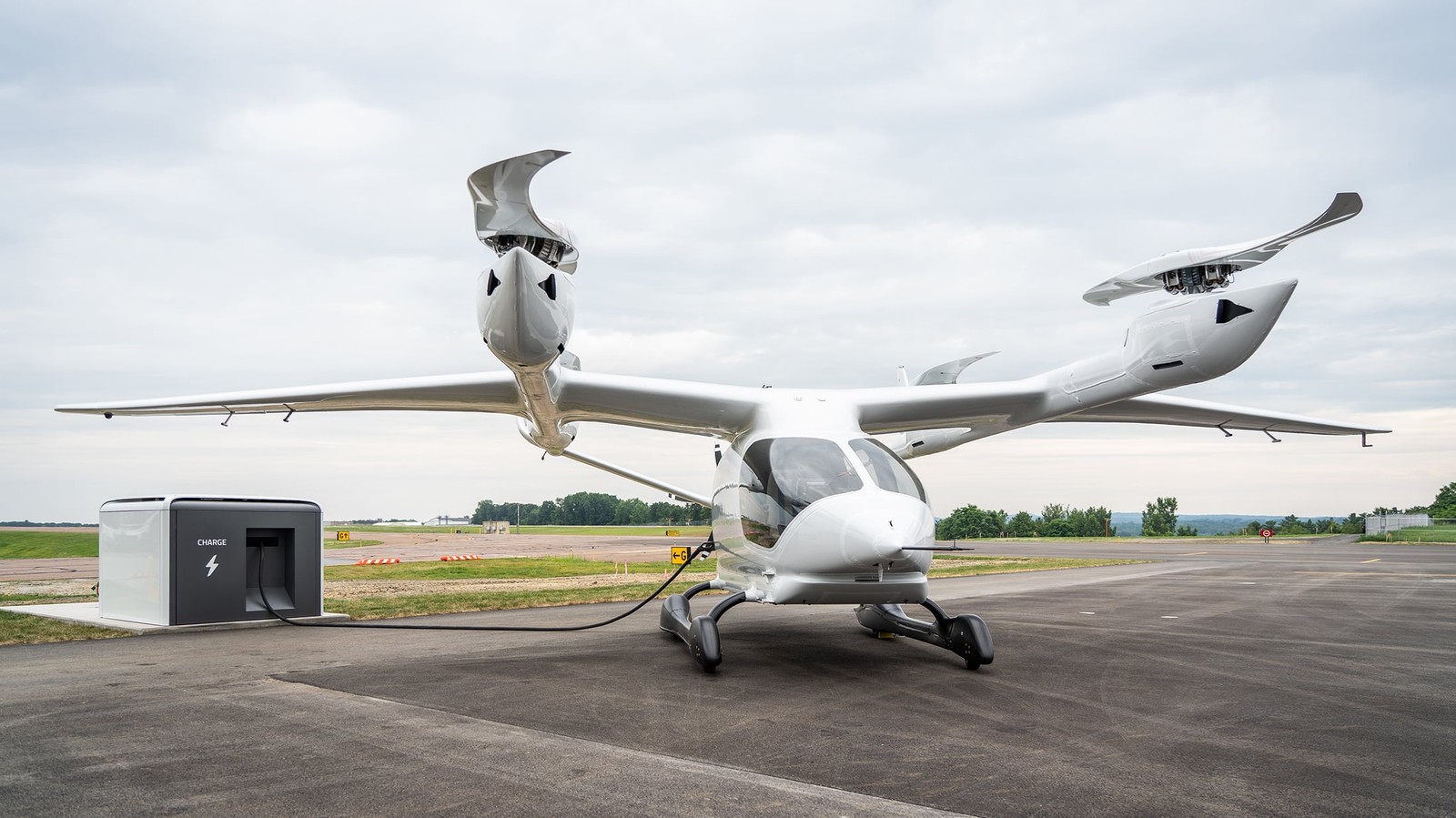
Utah’s uFLY program has a practical answer to the state’s geographic diversity; the Utah Department of Transportation has already deployed portable command centers with satellite-connected workstations that can be positioned anywhere in the state, supporting data collection across urban corridors, remote communities, mountainous terrain, and wildfire-prone regions. Utah also partnered with Beta to install the latter’s electric aircraft chargers at airports across the state.
Regional Mobility Makes a Comeback
Beneath the urban air mobility headlines, the eIPP’s most durable legacy may be regional connectivity.
The Pennsylvania Department of Transportation’s program, organized through the National Association of State Aviation Officials’ (NASAO) 13-state collaborative, is explicitly designed to develop routes analogous to those historically served under the Essential Air Service program—short-haul connections between small communities and regional hubs that have become economically unviable for airlines.
Working with the NASAO collaborative, Electra—a Virginia-based start-up developing a nine-passenger, hybrid-electric, short takeoff and landing (STOL) airplane—aims to demonstrate regional feeder routes between Atlantic City and Philadelphia.
In upstate New York, the same dynamics are playing out at a granular level. UPS currently operates small twin-engine feeder aircraft on sub-100-mile runs from New York’s North Country to Syracuse. The economics of electric aircraft—lower operating costs, reduced maintenance, no fuel—make those same routes not merely viable but potentially superior with AAM vehicles.
The uFLY program, spanning five states and built on the foundation of Project Alta (a state-led public-private AAM initiative Utah launched in 2024) has an additional long-horizon driver: Utah will host the 2034 Olympic and Paralympic Winter Games, and planners are already modeling how advanced aviation could support logistics, emergency response, and athlete transport during the event.
The Ecosystem and Its Gaps
The distribution of roles across the eight projects reveals the current shape of the nation’s AAM industry, particularly in terms of technology readiness.
Beta Technologies has the largest eIPP footprint, participating in seven programs and serving as both manufacturer and infrastructure provider—delivering aircraft and chargers across 10 states. While the company’s Alia 250 eVTOL model is still in the early stages of development and flight testing, its Alia CX300 conventional airplane counterpart, which has logged nearly 130,000 nm in flight testing, is expected to receive an FAA type certificate as early as this year.
Joby, which plans to offer ride-hailing services on its pilot-plus-four-passenger JAS4-1 eVTOL air taxi via the Uber app, was selected to participate in five eIPP projects. Archer Aviation is present in three programs with its Midnight eVTOL aircraft, also positioned for urban passenger transport.
Electra’s EL9 Ultra Short, selected to participate in three of the eight eIPP projects, is being certified under Part 23 rules. The Ultra Short is capable of operating from very short runways and existing heliport infrastructure. Virginia-based Electra is participating in Florida, New York, and the Pennsylvania multistate program, targeting dense urban and regional routes where a minimal ground footprint and conventional runway compatibility set it apart from the rest of the eIPP fleet.

Ampaire, a Los Angeles-based developer of hybrid-electric propulsion systems for existing regional aircraft, also appears on the Utah program’s manufacturer roster. Ampaire’s approach involves retrofitting conventional airframes with its hybrid system—an emphasis on incremental electrification rather than clean-sheet design that, alongside Electra’s Part 23 STOL airplane, underscores how broadly the FAA has drawn the eIPP’s technological boundaries.
Utah’s uFLY partnership also lists Jump Aero among its broader ecosystem contributors through the state’s Project Alta coalition, although the company’s aircraft will not be flying as part of the eIPP. Jump Aero’s JA1 Pulse is designed for emergency first response, built to carry one trained medical responder plus equipment to unprepared landing zones. Their presence in the Utah ecosystem signals how broadly the state is thinking about the range of missions AAM could eventually serve—well beyond air taxis and cargo.
The uFLY program also includes Sikorsky, a Lockheed Martin company, among its more than 30 public and private partners—notable as one of the few traditional aerospace primes in the portfolio and a signal of the program’s system-integration ambitions. Sikorsky has spent more than a decade developing an autonomy system called Matrix and is now implementing the system on various UAS.
AAM operators are embedded across the eIPP portfolio, serving as the practical bridge between technology and operations. Some, like Metro Aviation, Bristow Group, Republic Airways, and Alpine Air Express, bring decades of conventional flight operations experience to the program. Others represent a newer model: Future Flight Global (FFG), an operator partner in the Utah uFLY program, is structured specifically around AAM deployment—managing aircraft from multiple manufacturers across cargo, medical, and passenger missions rather than operating a single platform or fleet type.
One conspicuous absentee on the eIPP project list is the state of California. Despite being home base for several of the program’s most prominent participants, none of the eight selected projects is California-based. Archer, which has built its long-term commercial strategy around a Southern California urban air mobility network anchored by Hawthorne Municipal Airport and anticipated operations tied to the 2028 Los Angeles Olympics, leads no eIPP project in its home state.

Even so, California may still see early Wisk activity. “There might be some flights that, if the timing works out, we might try and do some of the flights in California to be able to collect that data and hit the ground running as fast as we can,” Dalton said, “and then, as our partners in Texas are ready, migrate those operations there.”
Collaboration across the industry, meanwhile, is more active than competition might suggest. “We have really healthy relationships with all of our friends in the industry,” Dalton told AIN, describing ongoing coordination through industry associations including GAMA, NBAA, and VAI, on shared policy priorities. “We want to make sure that the tide lifts all the boats.”
Three Years of eIPP Flights
The FAA and selected entities are still finalizing their OTA agreements, but the first flights are expected to begin within 90 days of signing. The program runs for three years.
That window may be shorter than it seems. Aircraft have to be positioned, operational agreements have to be established, local partners have to be ready, and the FAA has to be satisfied with the data-collection frameworks before any flight can meaningfully contribute to the regulatory record.
“We really want to make sure we’re using it as best we can,” Dalton said of the three-year timeline.
The resulting flights will not be the measure of the program’s success. Rather, the measure will be the quality of the regulatory output—the procedures, policies, and frameworks produced by the operational data. Whether that includes pre-type-certificate commercial passenger operations, cargo missions in industrial corridors, autonomous flights in controlled airspace, or some combination of all three, the objective is the same: to build the rules by following the practice of aviation’s oldest principle and actually flying.
The aircraft are largely ready. The question eIPP is designed to answer is whether the system around them—the airspace management, the infrastructure, the operational procedures, the regulatory framework—can be ready, too.
