
|
Getting your Trinity Audio player ready...
|
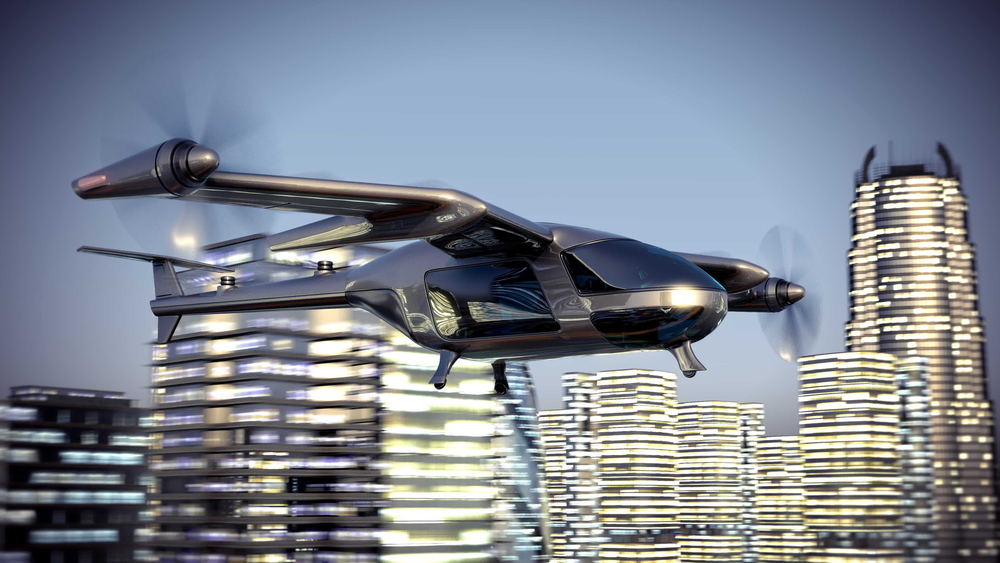
Over the past few weeks, we have been hearing news that Joby Aviation has been conducting flights over New York City, specifically to and from JFK airport and the various heliports located on the shore front of Manhattan. What we need to keep in mind when we read these good news is that these flights are being conducted under an experimental certificate, and as part of formal Federal Aviation Administration (FAA) Type Inspection Authorization (TIA) testing using the company’s first conforming aircraft. The good news resides in the fact that these flights mark the transition from prototype demonstrations to true certification flight testing, not that they are carrying passengers.
These Joby flights are being conducted with a pilot on board, so is it really fair to call them uncrewed aviation? For the past 13 years or so, the industry has been focusing on a future aviation paradigm in which pilots are remotely controlling aircraft and most of the flights are conducted under autonomous systems with pilots ‘monitoring’, not flying them.
The certification of an aerial vehicle designed and intended to carry passengers is orders of magnitude more stringent than for small drones built to carry packages or perform inspections, so let’s analyze the three aspects that cover this certification, regulatory, technological and human.
The Regulatory Imperative: Why the FAA Is Steering Toward Uncrewed AAM
The FAA’s approach to Advanced Air Mobility (AAM) is often portrayed as cautious, but the truth is more nuanced: the federal agency is shaping the conditions under which AAM can scale safely and credibly. The agency’s regulatory posture is driven by a simple reality: aviation is a zero‑margin‑for‑error domain. Every new aircraft architecture, operational model, and business concept must be integrated into a national airspace system that already supports millions of passengers and billions of dollars in commerce each year.
From the FAA’s perspective, uncrewed or remotely piloted aircraft (RPAs) are a regulatory necessity, given the general direction that transportation in general is taking towards autonomy. The agency must plan for an airspace where traffic density increases dramatically, where aircraft operate at lower altitudes, and where traditional pilot‑in‑cockpit assumptions no longer hold. Human pilots are excellent at judgment and adaptability, but they are also a bottleneck. They require training, certification, rest cycles, and physical presence. As AAM envisions thousands of vehicles operating simultaneously in urban corridors, the FAA sees automation as the only scalable path to maintaining safety.
This is why the agency’s recent frameworks, from the Innovate28 initiative to the evolving standards for detect‑and‑avoid (DAA), command‑and‑control (C2) links, and remote operations, all point toward a future where the pilot is increasingly offboard. The FAA is not mandating uncrewed aircraft outright, but it is building a regulatory environment that supposes automation will carry more of the workload. In doing so, the agency is preparing for an airspace where human oversight remains essential but is no longer tied to a cockpit seat.
